
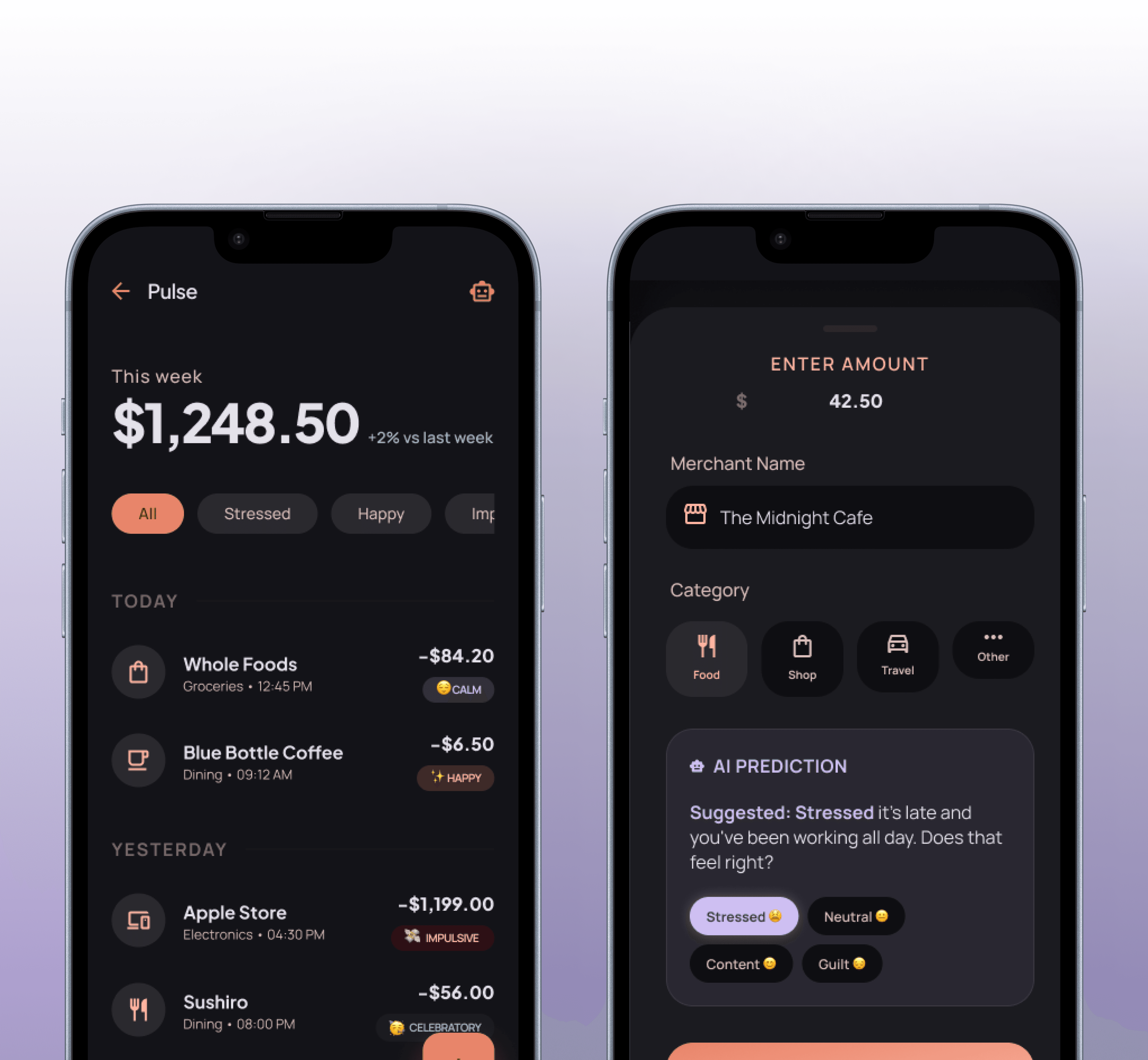

Overview
Most finance apps treat money like math. They count it, categorize it, and send you a notification when you've spent too much. But money isn't just a number it's one of the most emotionally loaded parts of our lives. We spend when we're stressed. We avoid checking our balance when we're scared. We feel guilty after impulse purchases, then do it again two weeks later.
Pulse is a concept I designed to explore what it would look like if a finance app actually acknowledged that. Not just what you spend, but how you feel when you spend it and what that pattern reveals about you over time.
The Problem
Cold apps for a very human problem.
Research
Understanding the emotional layer of spending.
To validate that this wasn't just my experience, I reached out to [X] people with a few direct questions about how they actually feel about money not how they budget, but how they feel.
The questions I asked:
What I heard:




I also looked at what the research says more broadly. Financial anxiety is widespread studies show that 64% to 72% of Americans report money as their top source of stress. Yet the apps designed to help rarely address the emotional dimension at all. They optimize for accuracy, not for how a person actually relates to their finances.
01
Competitive Audit
I looked at the four most commonly used finance apps Mint, YNAB, Copilot, and Monarch through one specific lens: Do they acknowledge how you feel?
| PULSE | MINT | YNAB | COPILOT | MONARCH | |
|---|---|---|---|---|---|
| Core Tracking | |||||
| Tracks income & expenses | ✓ | ✓ | ✓ | ✓ | ✓ |
| Categorizes transactions automatically | ✓ | ✓ | ✓ | ✓ | ✓ |
| Budget goal setting | ✗ | ✓ | ✓ | ✓ | ✓ |
| Emotional Intelligence | |||||
| Mood / emotion tracking | ✓ | ✗ | ✗ | ✗ | ✗ |
| Connects spending to emotional state | ✓ | ✗ | ✗ | ✗ | ✗ |
| Judgment-free language & tone | ✓ | ✗ | ✗ | ~ | ~ |
| AI & Insights | |||||
| AI-powered behavioral insights | ✓ | ✗ | ✗ | ~ | ~ |
| Conversational AI coach | ✓ | ✗ | ✗ | ✗ | ✗ |
| Pattern recognition over time | ✓ | ~ | ~ | ✓ | ✓ |
None of them do. They all assume that if you can see your spending clearly enough, you'll change it. But that's not how behavior change works. Insight alone isn't enough especially when the insight makes you feel worse.
02
The Opportunity
The gap I was designing toward: an app that doesn't just log your transactions, but connects them to your emotional state and over time, helps you see the patterns you couldn't see before.
Not to shame you. To help you understand yourself.
03
Design Principles
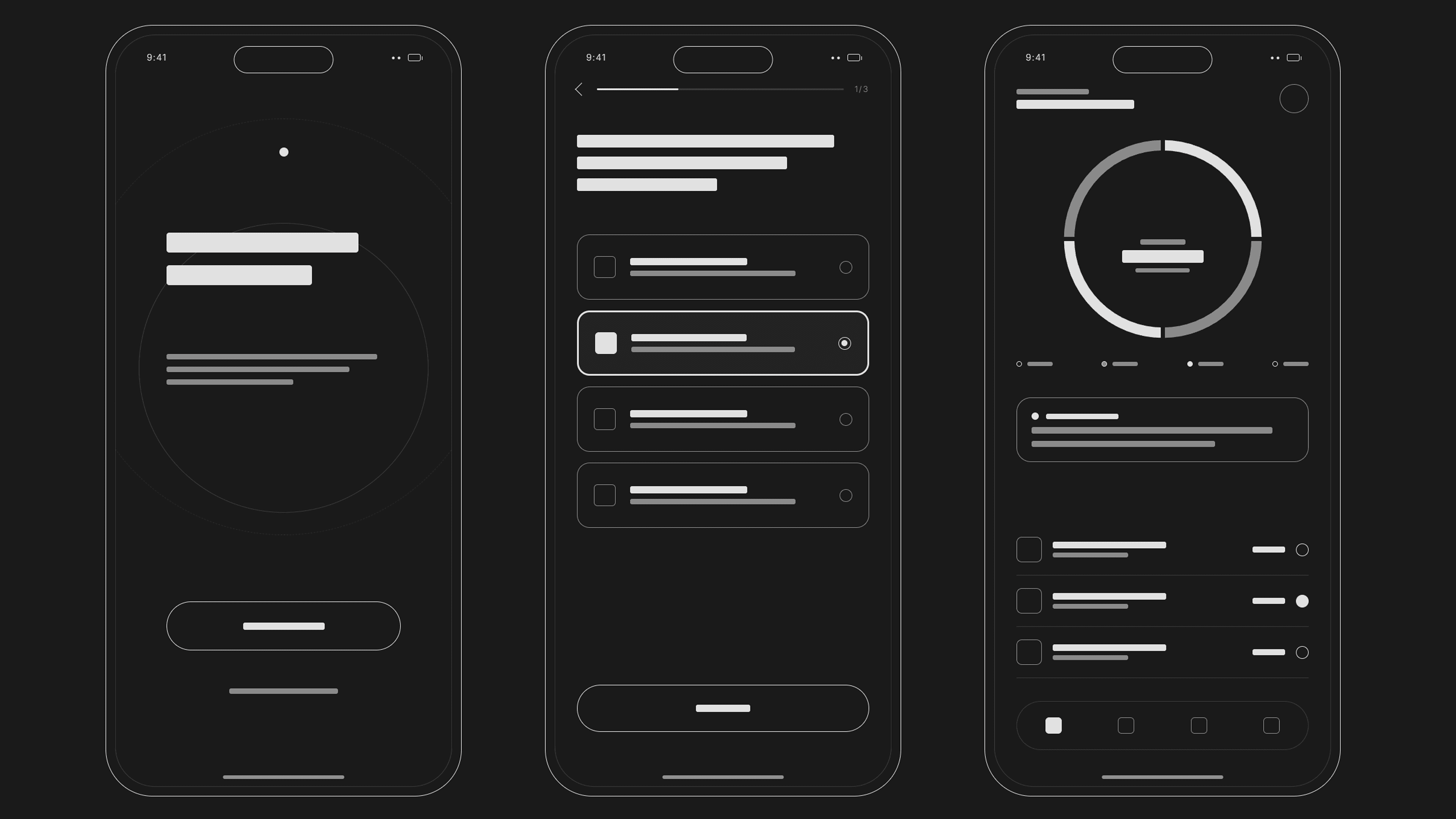
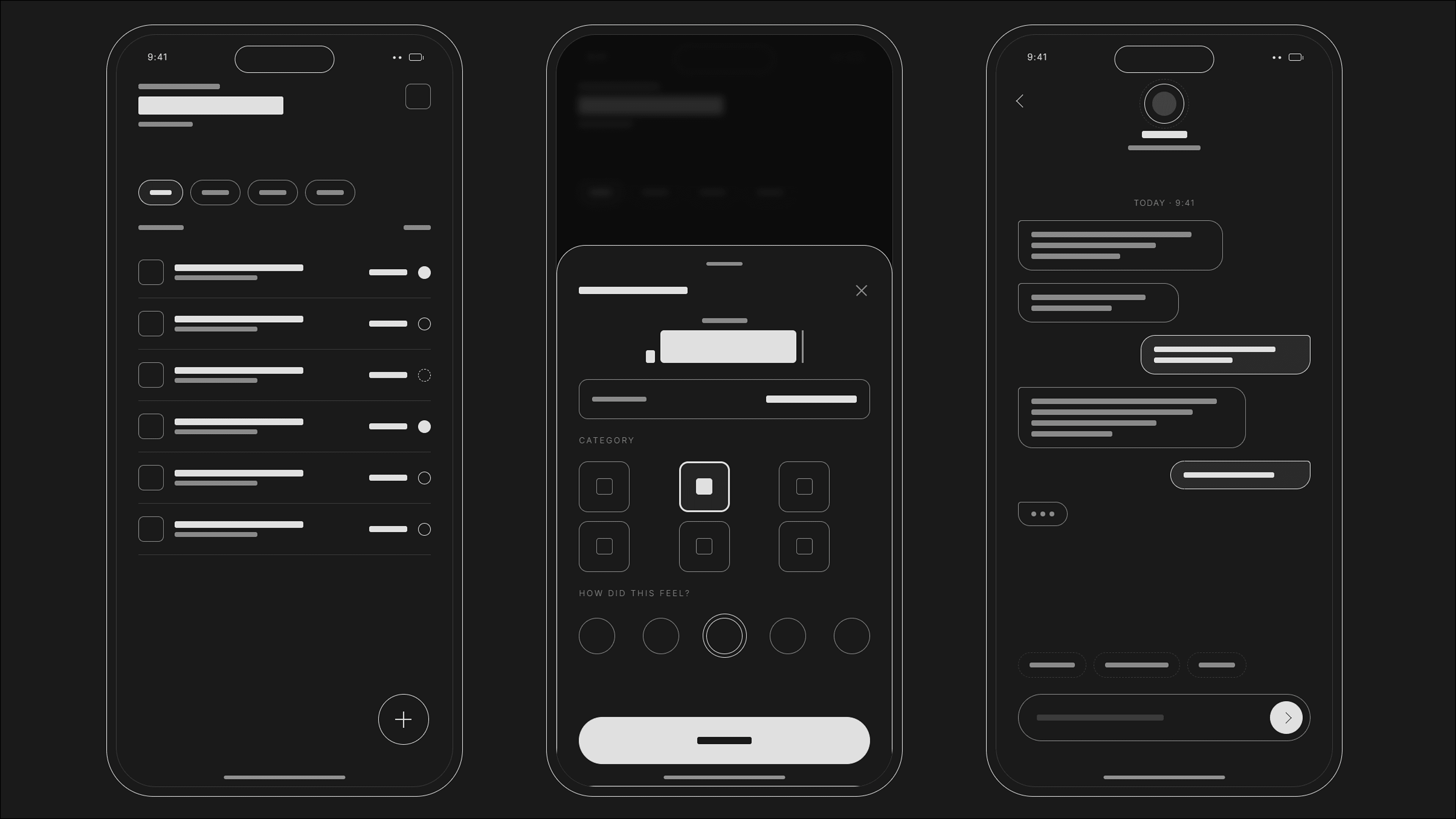
Before any wireframes, I set three principles that would guide every decision:
The app never tells you you're doing badly. It reflects patterns back without judgment to any users thoughout the journey
Adding a mood tag to a transaction should take 2 seconds. But the insight that comes from 3 weeks of those tags should feel meaningful.
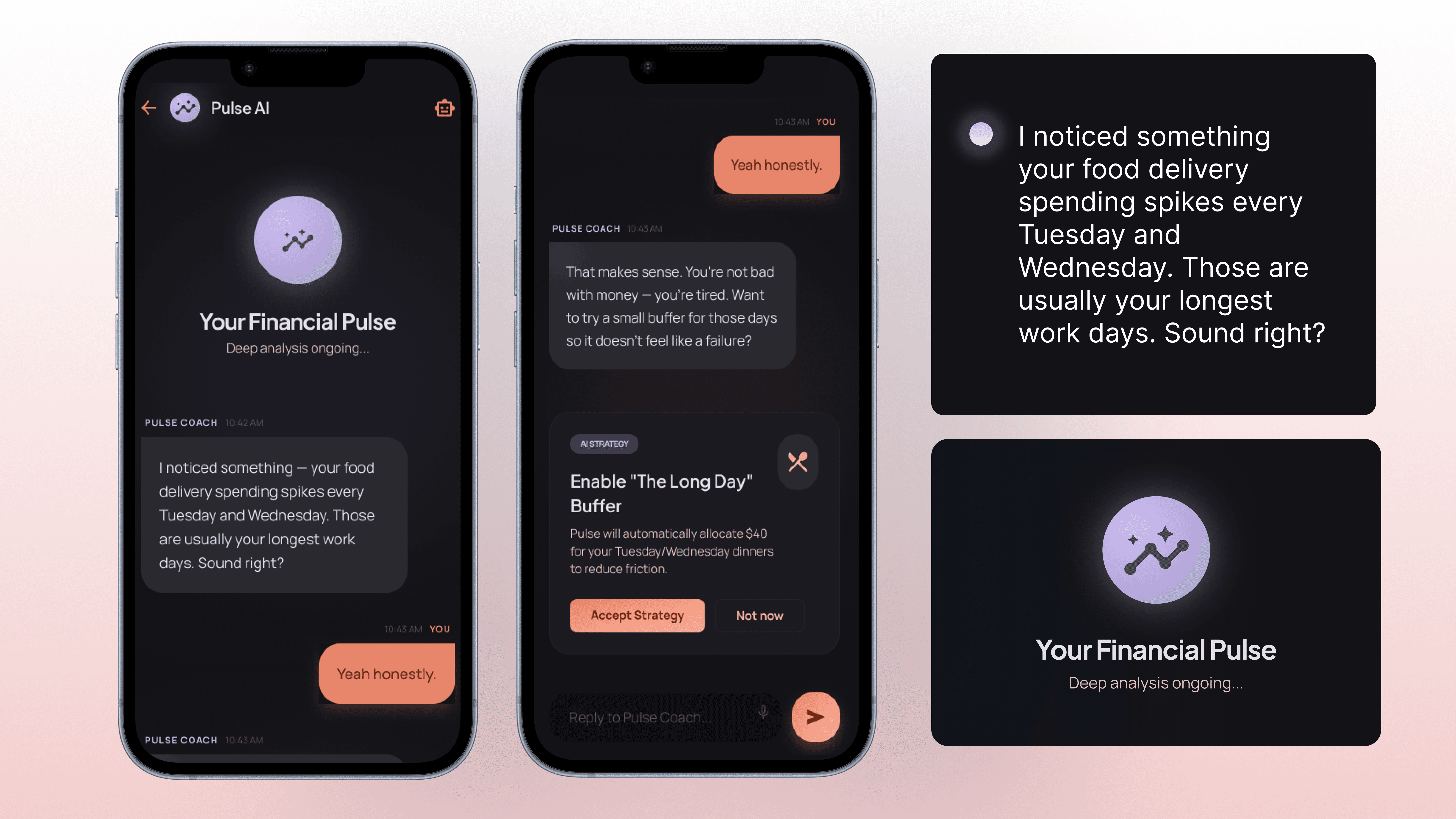
not a calculator. The AI in Pulse doesn't just surface data it notices things, asks questions, and talks to you like a person who's been paying attention.
04
Solution
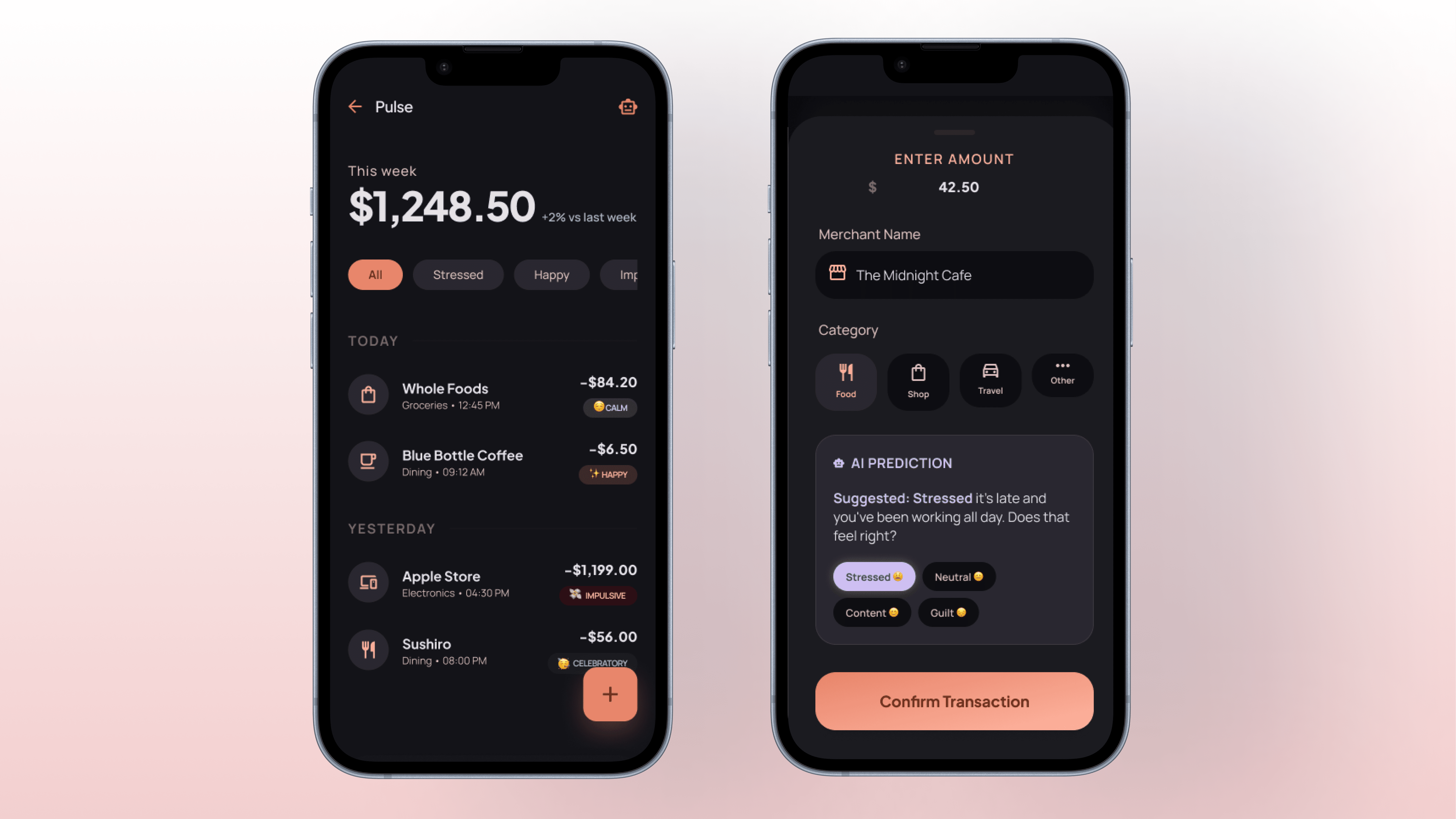
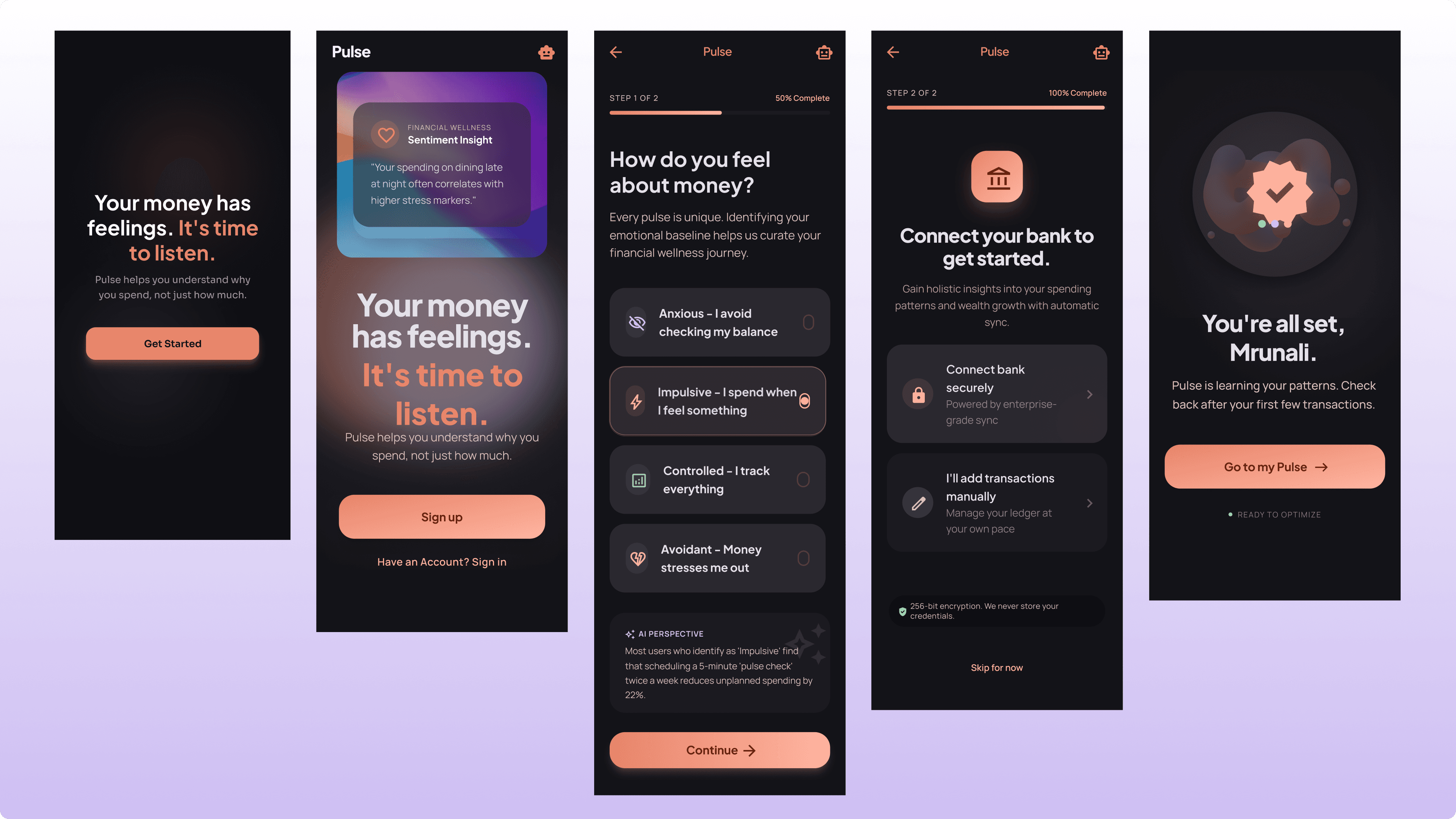
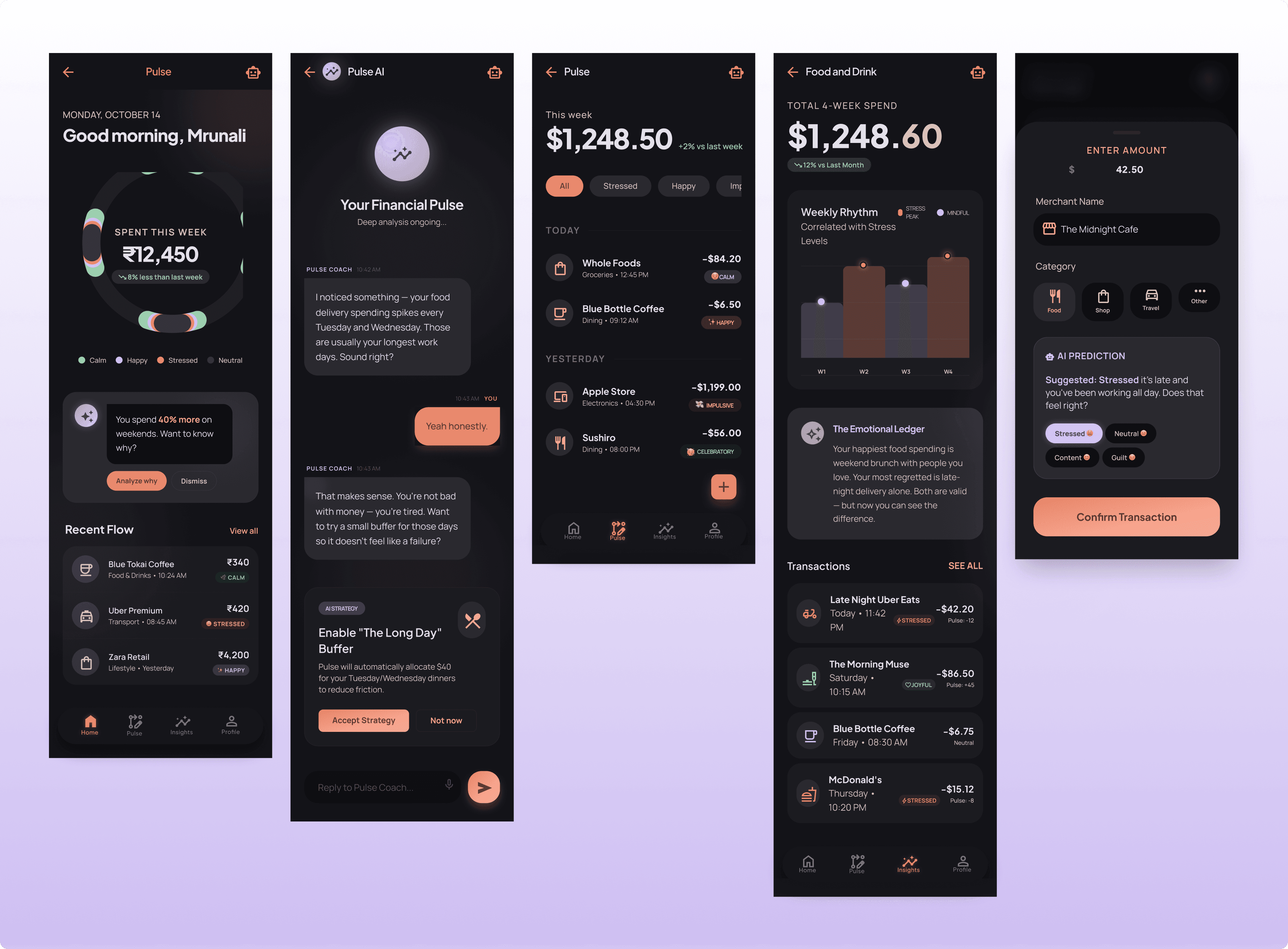
Pulse - an emotional finance app.
05
Design Decisions
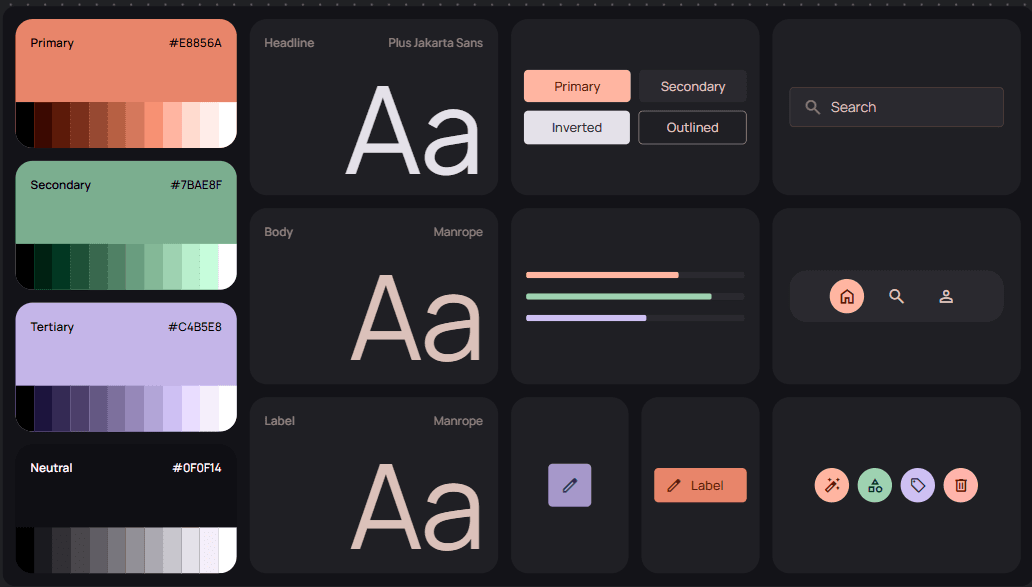
Dark, warm, not clinical. Finance apps default to white, blue, and green the visual language of banks and spreadsheets. Pulse uses a dark background with warm coral, sage, and lavender. It's meant to feel calm to open, not sterile.
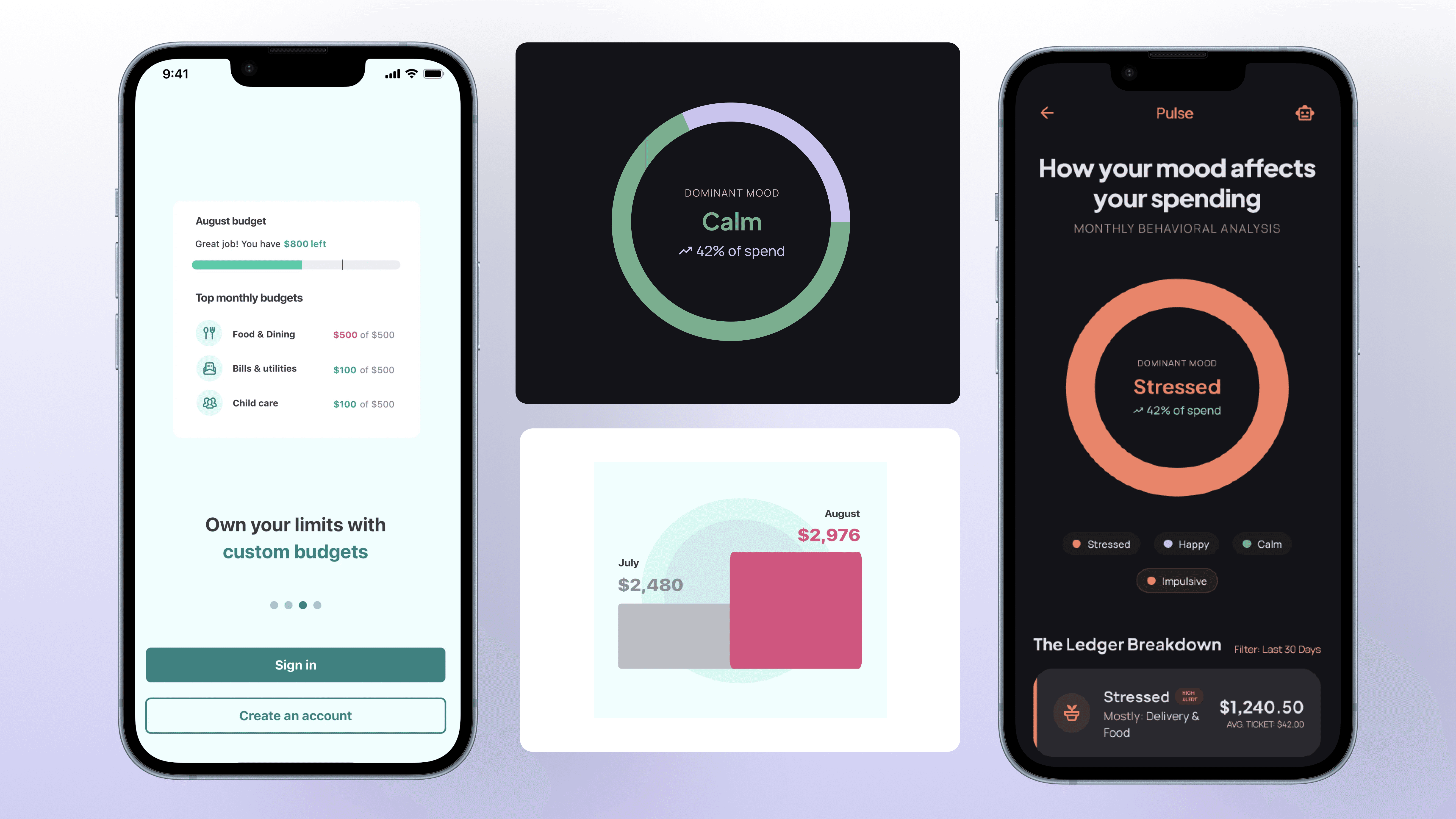
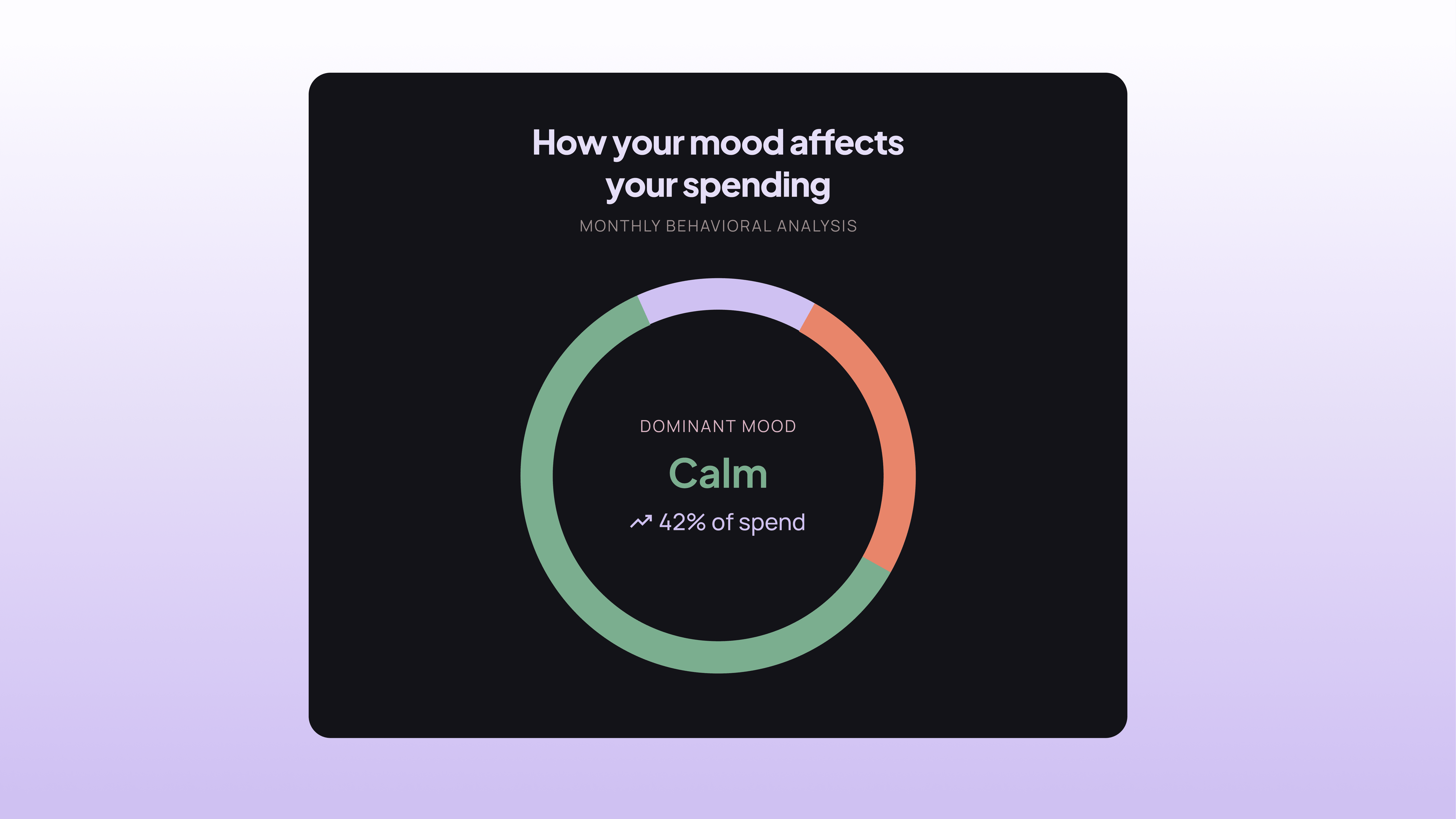
The ring instead of the bar chart. Most apps show spending as bar charts by category. The problem is that bar charts are comparative they make you immediately look for what's "too high." The ring is about the whole picture, not individual judgment. It also maps naturally to the emotional color coding in a way a bar chart can't.
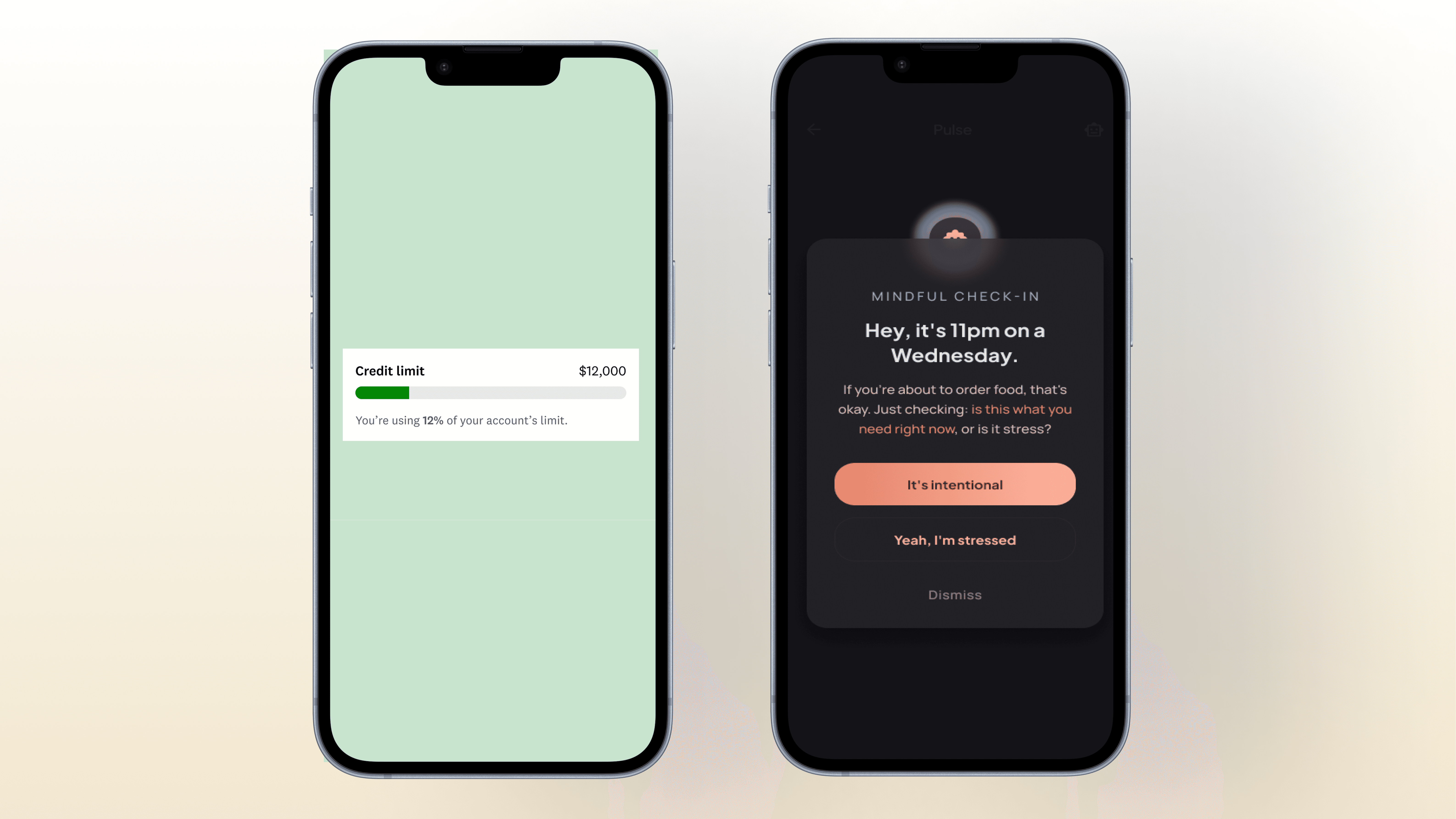
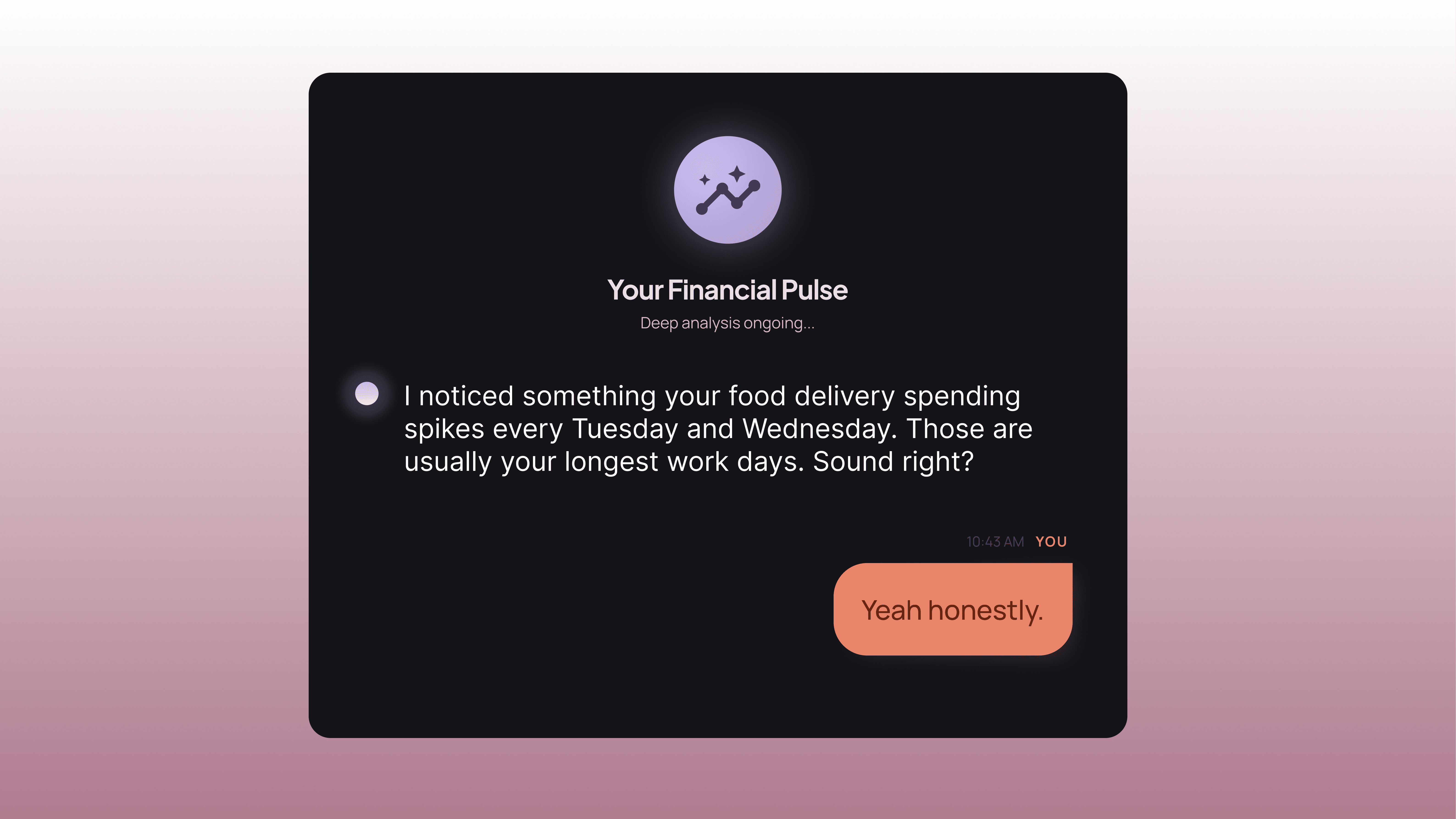
Conversation over notification. The standard app interaction is: you do something → app judges it. Pulse inverts this. The AI surfaces patterns and invites you into a conversation. The language is deliberately warm and human not "You exceeded your food budget" but "Your happiest food spending is weekend brunch. Your most regretted is late-night delivery alone. Both are valid."
06
07
Reflection
What I'd do differently with more time:
Pulse is a concept,
it hasn't been tested with real users at scale. If I were taking this further, the most important next step would be usability testing specifically around the mood-tagging interaction. The design assumes it's low-friction, but that assumption needs validation. I'd also want to explore the privacy angle more deeply asking people to log their emotional state alongside their financial data is a significant ask, the trust model needs to be airtight.
What this project taught me:
The most interesting design problems aren't about organizing information better — they're about understanding what emotional relationship someone has with a system, and designing for that honestly. Pulse pushed me to think beyond screens and interactions into behavior, psychology, and what it actually takes for a product to earn someone's trust.
