
Lumyn, Here we go!

The Problem
Health data is everywhere. Understanding it isn't.
The average person with a wearable and annual bloodwork is sitting on hundreds of data points they don't know how to act on. Apple Health shows your heart rate. Your labs show your cortisol. Your fitness app shows recovery. None of them talk to each other. None of them tell you what to do.
This isn't a data problem. It's a translation problem.
I saw this firsthand designing healthcare platforms at the University of Arizona College of Medicine. Users consistently disengaged the moment data felt clinical and disconnected from action. Numbers without context don't change behavior. Insight does.
The Insight
People don't need more metrics. They need one answer to one question:
The Solution
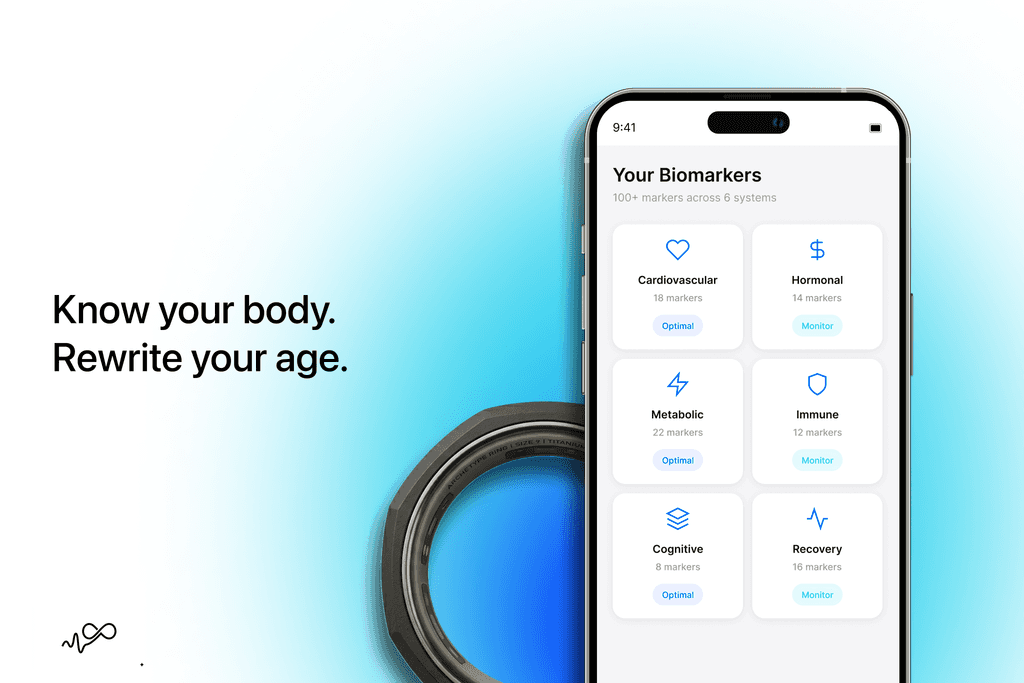
Lumyn is what Apple Health should have been an AI-powered companion that connects your wearable and lab results, analyses 100+ health markers, and gives you three things no existing app combines well: your biological age, a plain-language explanation of what's driving it, and a ranked action plan to improve it.
Every screen answers the question the user is actually asking. Not just displaying data they technically have access to.
Key Design Decisions
Biological age as the anchor Instead of 100 equal metrics, Lumyn leads with one number that synthesizes everything. A single north star that's emotionally resonant and scientifically grounded.
AI as translator, not feature Every biomarker screen ends with a plain-language AI insight no jargon, no judgment. Designed around what I learned in healthcare: users disengage when their own data makes them feel confused or judged.
Blueprint over dashboard Dashboards show you where you are. Lumyn tells you how to get somewhere better. Every intervention is ranked by its specific impact on your biological age.
No traffic light colors Red, amber, green triggers anxiety in health contexts. Lumyn uses only its blue palette throughout health data should feel empowering, not alarming.
What I'd Do Next
User testing with people who actively track their health specifically testing whether biological age framing motivates or creates anxiety. Clinical validation of the AI insight layer. Accessibility audit for varying health literacy levels. And designing for the long game Lumyn's 6-month re-test cycle means it needs to feel like a relationship, not a single session.
Reflection
The most important design decision in health UX is what you choose not to show. Every piece of data that lives behind a tap rather than on the surface those were the hardest calls. Restraint isn't laziness. It's what keeps people engaged instead of overwhelmed.
